How to Analyse UK Social Housing Stock Data for Product Specification
Product specification in social housing is stronger when it is based on how stock actually varies across places.
That sounds straightforward, but many teams still rely on broad market assumptions rather than looking closely at the stock, efficiency, construction, and geographic patterns that shape where a product is likely to fit best.
That is where stock data becomes commercially useful.
Start with the product question
Before analysing any dataset, be clear about the decision you want the analysis to support.
For example:
- Where is our product likely to be most relevant?
- Which regions deserve more specification effort?
- Which stock characteristics align best with our offer?
- Where should sales messaging differ across territories?
If those questions are unclear, the analysis usually turns into a fact-finding exercise with no commercial end point.
Focus on variables that connect to the real offer
The right stock data depends on the proposition.
Useful inputs may include:
- EPC profile
- potential efficiency improvement
- construction and wall type
- roof insulation indicators
- glazing profile
- heating system patterns
- gas versus off-gas context
- broader geographic concentration
Not every variable matters equally for every supplier. The important point is to choose the measures that connect to a real product or commercial decision.
Compare areas, not just averages
National averages rarely help specification teams decide where to focus.
A more useful approach is to compare areas against each other:
- Which regions have a stronger concentration of the stock types we care about?
- Where do building characteristics suggest a better fit for our product?
- Which territories appear weaker and should move down the priority list?
This turns stock analysis into a prioritisation tool rather than a generic market overview.
Look for usable patterns
The most helpful outputs are usually the ones a commercial team can act on quickly:
- ranked territories
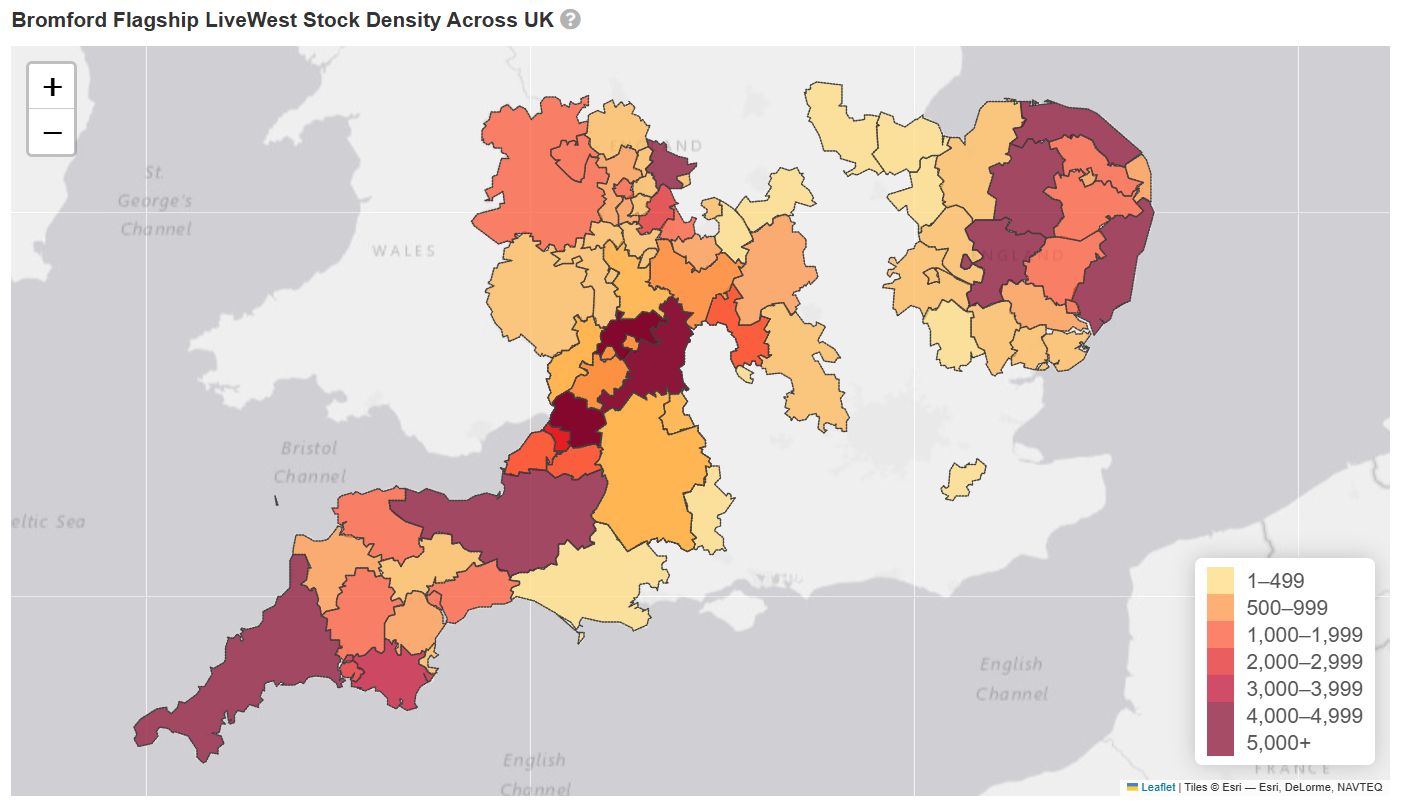
- mapped concentrations
- summary views for selected areas
- local drill-down when a patch looks promising
That makes it easier to translate data into decisions around specification effort, account selection, and messaging.
Avoid the trap of over-precision
There is a temptation to talk as if a stock dataset gives a definitive answer about what every landlord needs.
It does not.
A more credible use of the data is:
- spotting patterns
- improving prioritisation
- shaping better questions
- supporting more relevant conversations
That is usually enough to create commercial value.
Connect stock analysis to outreach and planning
Stock analysis becomes far more useful when it feeds real workflows.
For example:
- prioritising which territories should receive specification effort first
- deciding which accounts belong in an outreach sequence
- tailoring messages to the dominant housing patterns in a patch
- helping regional teams explain why a territory matters
Without that link, even strong analysis can sit unused.
A practical workflow
For product teams or suppliers, a sensible process is:
- Define the offer and the stock characteristics most relevant to it.
- Compare those characteristics across regions or sales areas.
- Identify the territories that look strongest.
- Drill into smaller local pockets where needed.
- Use that insight to shape targeting, specification planning, and account conversations.
This is usually more effective than trying to interpret a large housing dataset all at once.
Where PREEMPT fits
PREEMPT helps make this kind of analysis more usable by presenting housing and geographic patterns in a way that supports territory comparison and local drill-down. That can help teams move from raw stock data to more practical decisions about where a product is likely to fit and where commercial effort should go first.
That usability piece is often what determines whether the data gets used at all.
Final thought
Analysing UK social housing stock data for product specification is not mainly about producing more information.
It is about making better decisions on where to focus.
When the analysis is tied to a real commercial question, it becomes much more valuable.
If you want a more usable way to explore stock patterns, compare territories, and support product specification planning, PREEMPT can help turn housing data into something more actionable.
Comments are closed